Versione italiana – Click here for the English Version
Quattro secoli di meraviglia. E un sorprendente legame con il grano.
Guardati intorno.
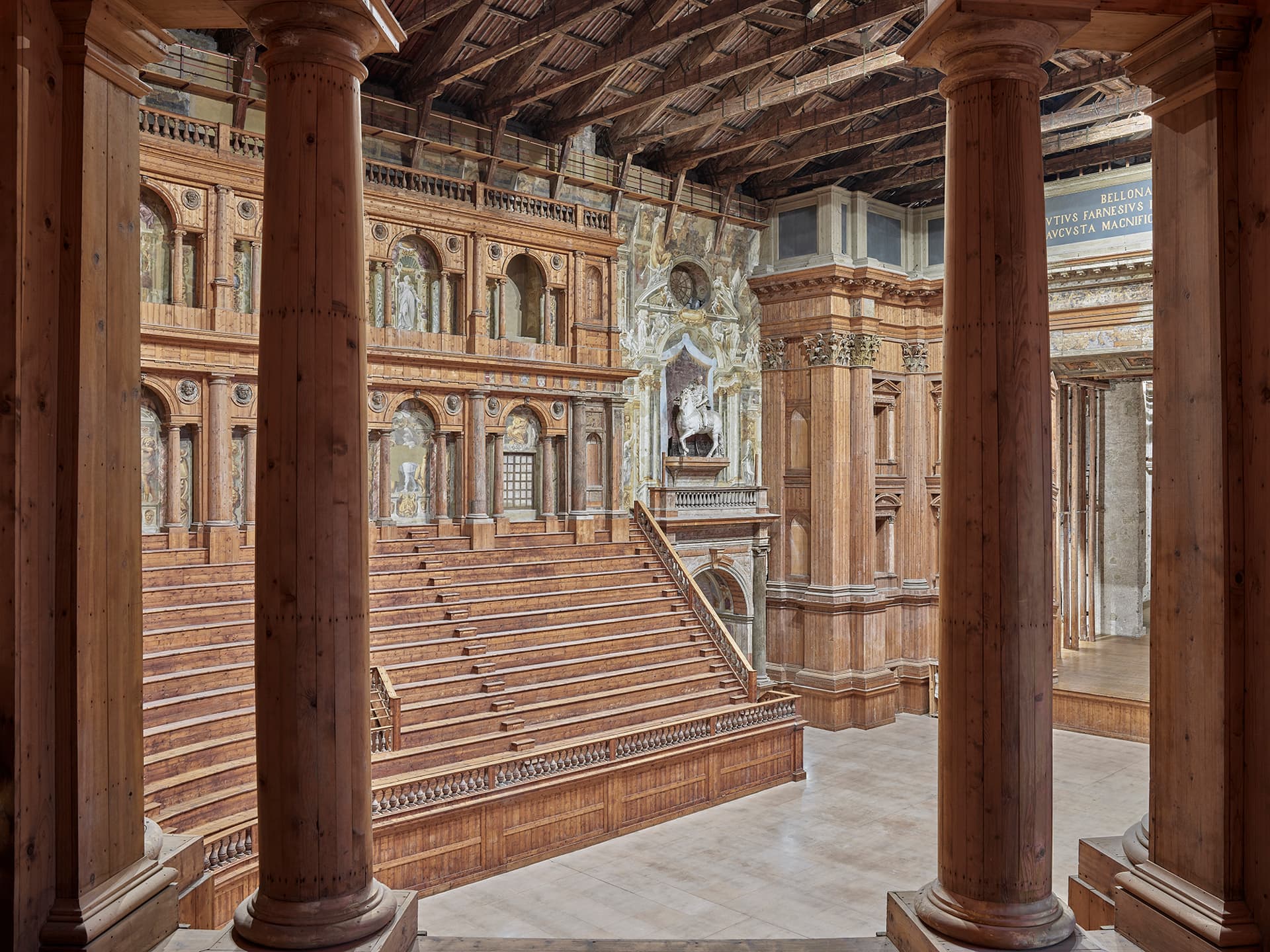
Quello che stai vedendo non è semplicemente un teatro storico. All’inizio del Seicento era una vera macchina dello spettacolo, progettata per sorprendere gli ospiti della corte Farnese con architettura, musica, scenografie, ingegneria ed effetti speciali.
Fu voluto dal duca Ranuccio I Farnese e progettato dall’architetto e ingegnere Giovan Battista Aleotti. Terminato nel 1619, attese quasi dieci anni prima di essere inaugurato ufficialmente.
Sembra marmo. Ma quasi nulla lo è.
Oggi il legno è immediatamente riconoscibile, ma nel Seicento l’effetto era completamente diverso.
Legno, stucco e persino paglia vennero dipinti e lavorati per sembrare marmo bianco, porfido rosso e oro. Statue, decorazioni e prospettive trasformavano l’intera sala in una grandiosa illusione.
In altre parole, il Teatro Farnese era già un’esperienza immersiva quattro secoli prima che inventassimo questa espressione.
Quanto è grande?
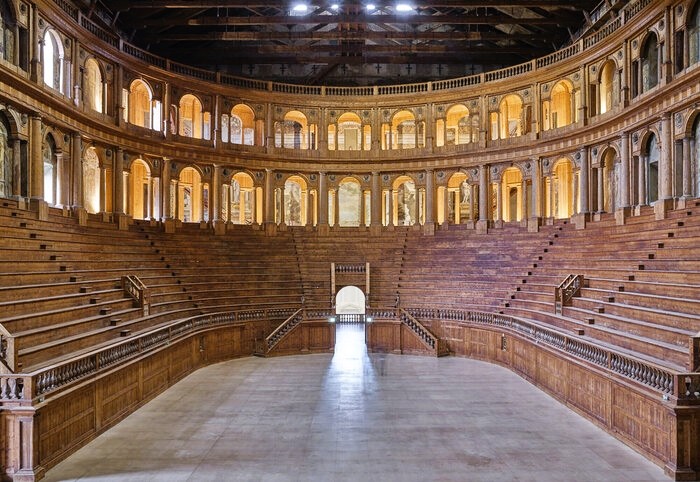
La sala raggiunge 87 metri di lunghezza, 32 di larghezza e 22 di altezza. Le gradinate potevano accogliere oltre 3.000 spettatori.
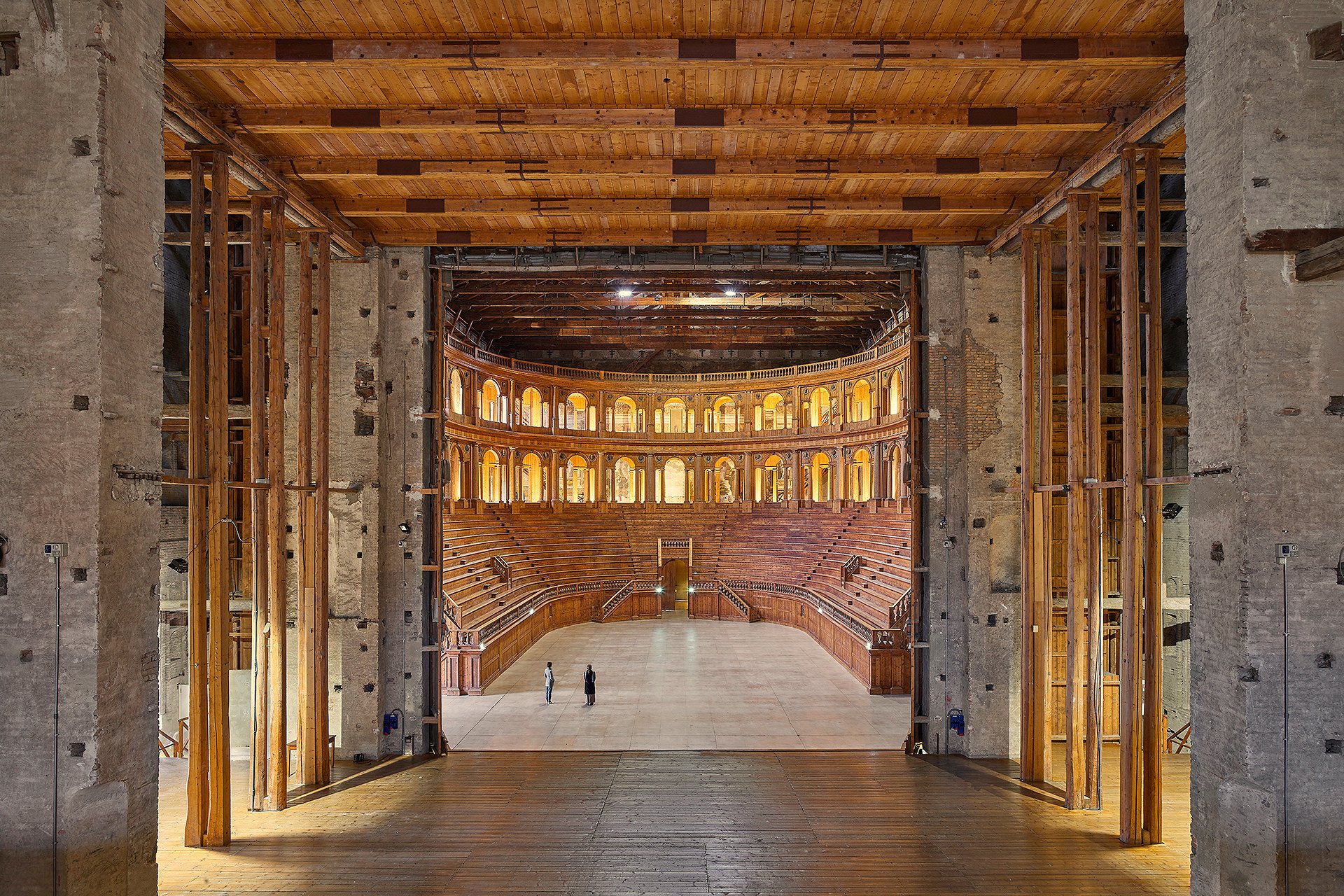
E guarda verso il palcoscenico. È profondo ben 40 metri.
Dietro e sotto la scena si nascondeva un complesso sistema di binari, quinte mobili, gallerie e macchine sceniche progettato per far apparire, scomparire e trasformare interi scenari davanti agli spettatori.
Ora immagina tutto questo… pieno d’acqua.
Il Teatro Farnese fu inaugurato nel 1628 per celebrare il matrimonio tra Odoardo Farnese e Margherita de’ Medici.
Lo spettacolo, Mercurio e Marte, aveva musiche di Claudio Monteverdi e culminava con qualcosa di incredibile anche per gli standard di oggi: una battaglia navale con mostri marini.
Per realizzarla, la platea venne realmente allagata utilizzando l’acqua dell’acquedotto farnesiano, convogliata attraverso serbatoi e un sofisticato sistema idraulico nascosto sotto il palcoscenico.
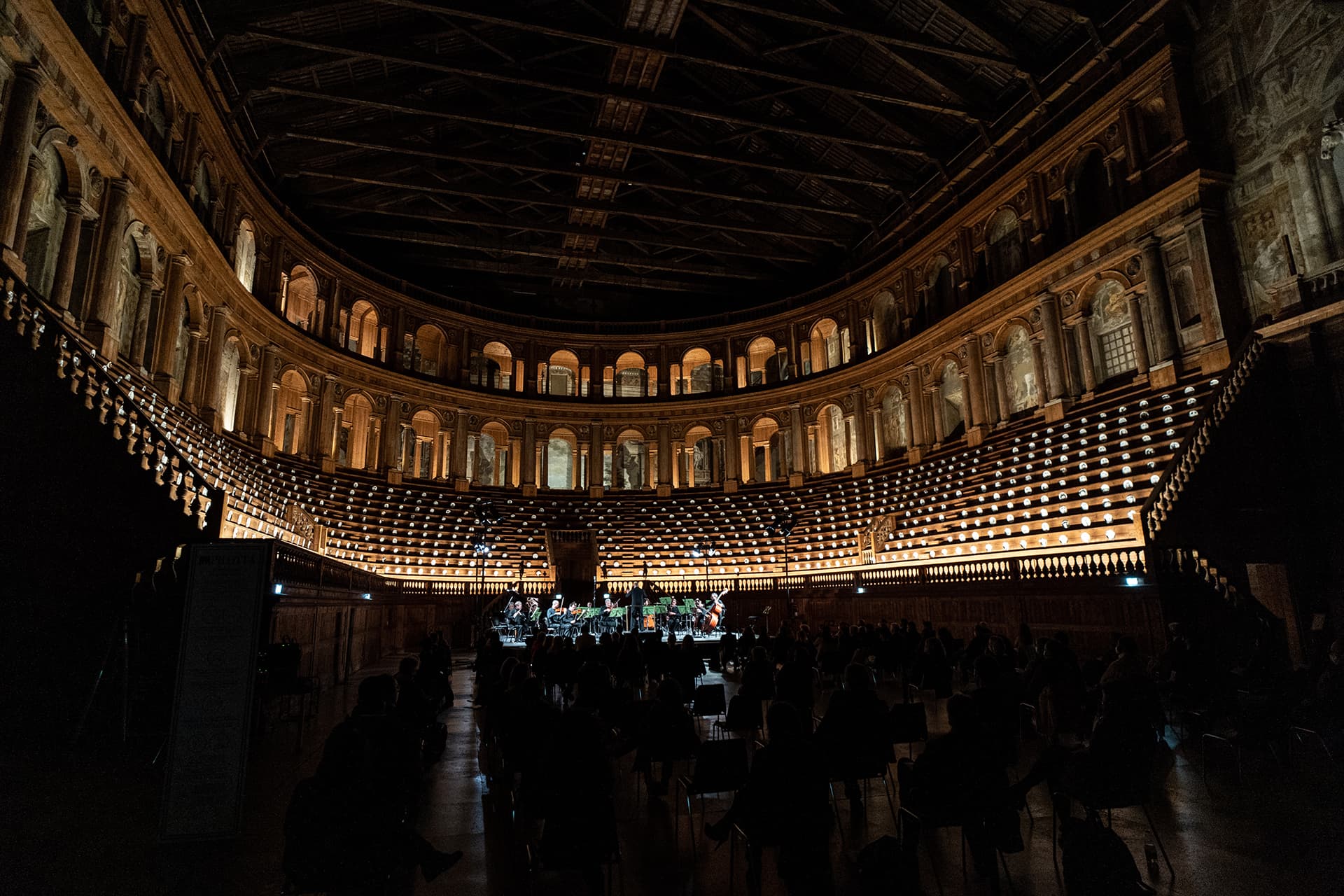
E c’è un dettaglio curioso. I musicisti furono sistemati davanti al palcoscenico, protetti da un parapetto che serviva anche a difenderli dall’acqua della battaglia navale. Quella disposizione anticipava una soluzione che sarebbe poi diventata abituale nel teatro all’italiana.
Un teatro gigantesco utilizzato soltanto nove volte.
Costruire questi spettacoli era estremamente complesso e costoso.
Per questo, tra il 1628 e il 1732, questa enorme sala ospitò soltanto nove grandi rappresentazioni, quasi sempre per matrimoni dinastici o per accogliere ospiti illustri.
Un luogo creato non per la quotidianità, ma per le occasioni eccezionali.
E la pasta?
Qui arriva una coincidenza particolarmente appropriata per il World Pasta Day.
Nella decorazione originale del teatro compariva Cerere, la dea romana dell’agricoltura e dei raccolti, insieme a cornucopie, frutta e simboli dell’abbondanza.
Grano, raccolto, abbondanza. Quattro secoli dopo, sono concetti che parlano direttamente anche al mondo della pasta.
Ma il legame con Parma è ancora più profondo.
Quando questo teatro venne inaugurato nel 1628, la lavorazione della pasta faceva già parte della storia della città. L’Arte dei Fornai di Parma risale al 1236 e per secoli i fornai locali produssero anche pasta all’uovo secondo la tradizione emiliana. Nel Seicento, sotto i duchi, grano, farine, fornai e pastai erano così importanti per la vita della città da essere sottoposti a controlli specifici.
In altre parole, mentre qui la corte Farnese stupiva l’Europa con musica, acqua e scenografie, fuori da queste mura Parma costruiva già una parte della sua lunghissima storia con il grano e la pasta.
Un teatro sopravvissuto due volte.
Nel maggio del 1944, i bombardamenti distrussero quasi completamente il Teatro Farnese.
La ricostruzione iniziò negli anni Cinquanta e riuscì a recuperare e riutilizzare anche una parte dei legni originali. Nel 1965 il teatro tornò finalmente a vivere.
Prima di uscire, alza ancora una volta lo sguardo.
Più di quattrocento anni fa questo luogo fu costruito con uno scopo preciso: sorprendere persone arrivate a Parma da lontano.
Questa sera, in qualche modo, la storia si ripete.
Farnese Theater
English version
Four centuries of wonder. And a surprising connection with wheat.
Look around.
What you are seeing is much more than a historic theatre. In the early 17th Century it was an extraordinary machine for entertainment, designed to amaze the guests of the Farnese court through architecture, music, scenery, engineering and spectacular effects.
Commissioned by Duke Ranuccio I Farnese and designed by architect and engineer Giovan Battista Aleotti, it was completed in 1619 but had to wait almost ten years for its official inauguration.
It looks like marble. But almost none of it is.
Today the wooden structure is immediately visible. In the 17th Century, the effect was completely different.
Wood, plaster and even straw were painted and transformed to imitate white marble, red porphyry and gold. Statues, decoration and perspective turned the entire hall into a magnificent illusion.
In other words, the Farnese Theatre was creating immersive experiences four centuries before we invented the expression.
Just how big is it?
The hall is approximately 87 metres long, 32 metres wide and 22 metres high, and its tiers could accommodate more than 3,000 spectators.
Now look towards the stage. It extends an extraordinary 40 metres into the distance.
Behind and beneath it was a sophisticated system of tracks, movable scenery, galleries and stage machinery designed to make entire settings appear, disappear and transform before the audience’s eyes.
Now imagine all of this… filled with water.
The theatre was finally inaugurated in 1628 to celebrate the marriage of Odoardo Farnese and Margherita de’ Medici.
The production, Mercury and Mars, featured music by Claudio Monteverdi and ended with something astonishing even by today’s standards: a mock naval battle complete with sea monsters.
The auditorium floor was actually flooded using water from the Farnese aqueduct, reservoirs beneath the stage and an ingenious hydraulic system.
There is another wonderful detail. Musicians were positioned in front of the stage behind a protective barrier that also helped shield them and their instruments from the water. This arrangement anticipated a solution that would later become familiar in Italian theatres.
A huge theatre used only nine times.
Productions on this scale were enormously complicated and expensive.
As a result, between 1628 and 1732 this spectacular hall hosted only nine major court performances, generally for dynastic weddings or visits by distinguished guests.
It was a place created not for ordinary occasions, but for extraordinary ones.
And what about pasta?
Here is a connection that feels particularly appropriate during World Pasta Day.
The theatre’s original decorative programme included Ceres, the Roman goddess of agriculture and the harvest, together with cornucopias, fruit and symbols of abundance.
Wheat, harvest, abundance. Four centuries later, those ideas have an obvious resonance for the world of pasta.
And Parma’s connection goes much deeper.
When this theatre opened in 1628, pasta was already part of the city’s history. Parma’s Bakers’ Guild dates back to 1236, and for centuries local bakers also produced egg pasta according to the Emilian tradition. During the 17th century, grain, flour, bakers and pasta makers were important enough to be closely regulated by the ducal authorities.
So, while the Farnese court was astonishing Europe here with music, water and theatrical engineering, outside these walls Parma was already building its centuries-old relationship with wheat and pasta.
A theatre that came back to life.
In 1944, bombing almost completely destroyed the Farnese Theatre.
Reconstruction began in the 1950s, reusing some surviving original timber, and by 1965 the theatre had returned to life.
Before you leave, look around one more time.
More than four centuries ago, this place was created with one purpose: to amaze people who had travelled to Parma from far away.
Tonight, in a way, history is repeating itself.